
Participation in recreational snowboarding has increased, and is today one of the most popular winter sports in Finland, as reported by Kasperi Teittinen (This is Finland, 2023). Due to its fast-paced characteristics, snowboarding develops both physical and technical skills (Vernillo, Pisoni, Thiébat, 2019).
As participation in the sport grew, and competition level intensified, the number of injury increases at the same time (Weinstein et al, 2018).
First, it is important to notice that unlike skiers, snowboarders suffer more from acute injuries (Weinstein et al, 2018). In recreational snowboarding he most common injury happened in upper limb, with wrist and clavicle fracture and shoulder dislocation (Weinstein et al, 2018). There is noticeable increase of spine injuries with the increase of parks and freestyle snowboarding (Deady and Salonen, 2010).
The purpose of this text is to discuss the most common injury that may occur in recreational snowboarding. Being a snowboarder myself, the second important point, is not to say that it is more dangerous than any other physical activity, although it is known as an extreme sport. Injury is, unfortunately, a common process in an athlete’s life.
Finally, I want to draw snowboarders’ attention on the fact that physiotherapy can help with the sports-specific injuries as well as injury prevention. The recovery process is easier when one receives tailored and snowboard-specific rehabilitation or training. Do not let your pain prevent you from practicing the sport you love.
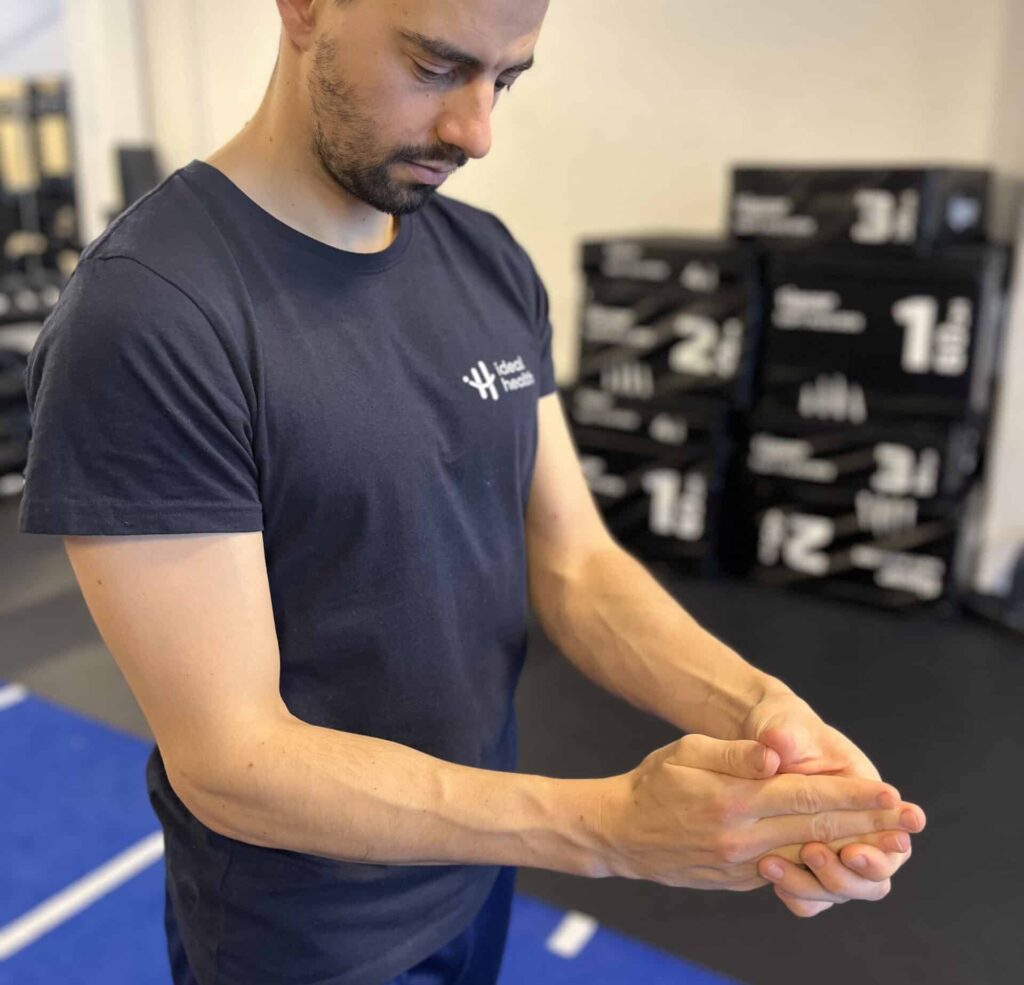
Shoulder and wrist
The number of shoulder injury, clavicle fracture and shoulder dislocation, is associated with the falls occurring in snow-parks and freestyle snowboarding (Owens et al., 2018). The most common areas are the glenohumeral joint (49,3%) and the acromoclavicular joint (17,9%) (Owens et al., 2018). The most common mechanism of shoulder injury are the direct falls and an eccentric muscle contraction when the arm is stretched (Deady and Salonen, 2010). These direct blows result also in rotator cuff muscles injuries (Owens et al., 2018).
The wrist joint represents 21,6% of all snowboarding injuries and 44% of upper limb injuries, so it is the most common upper limb joint to be injured, and very often fractured, amongst beginners level snowboarders (Owens et al., 2018, Deady and Salonen, 2010). The mechanism of a bigger majority of wrist injury is falling backward (Deady and Salonen, 2010).
Spine injury
It is important to understand that the majority of spine injuries happen with intentional jumps, and are seen 4 times more in snowboard than in skiing (Weinstein et al, 2018). It never said well enough that proper techniques in jumping and landing must be taught, especially when the athlete is young (Weinstein et al, 2018). the two most common spinal injuries are burst fractures (1) (the vertebrae breaks into multiple pieces) and anterior compression fracture (2) (small breaks or cracks in the vertebrae).
A burst fracture may cause the following symptoms:
- Moderate to severe back pain that is worse with movement
- Numbness, tingling and weakness
- Loss of bowel or bladder control.
The symptoms of a compression fracture may include:
- Sudden back pain (pain may get better with rest and worse when you move).
- Limited mobility and flexibility (difficulty standing, walking, bending or twisting).
- Tingling or numbness in your back (pinched nerves).
- Tenderness at the fracture site.
- Muscle weakness or spasms.
Knee injury
Against all odds, knee injury is not one the most encountered injuries in snowboarding unlike skiing. Nevertheless, Anterior Cruciate Ligaments (ACL) can be put at risk, through the eccentric force production in quadriceps when flexion and rotation happen in the knee from landing a higher number of jumps (Deady and Salonen, 2010).
Other
This is a non exhaustive list of injuries. Many other discomfort, pain and injury can occur because of unexpected situation of such sport like snowboarding and its playground. Many more dramatic injuries happen in extreme sport such as head and brain injury and neck injury due to violent hit (collision or falls).

Injury prevention and management
First of all, the use of protection like helmed and back protection are of great measures to reduce the risk of severe injuries. Fall prevention = Balance training. As the most common injuries occur in falling, is it interesting to focus the training balance.
Balance is composed of three elements:
- Vestibular system (inner ear): giving information on head’s location and motion. A simple way to train, is to walk a straight line while turning your head. Imagine a line you are walking, one foot behind the other one, turn your head right then left and maintain the straight line.
- Eye: Eye muscles and nerves. Eyes training: reducing vision, closing eyes, eye tracking fingers, eyes fixed while moving head and standing on one leg…
- Proprioception: it is your body’s ability to sense its own position and movements through many receptors in our joints, muscles, tendon, etc…
Balance issues are commonly treated by physiotherapists(Horak et al., 2009). Disruptions in balance occur more often than on can think (especially after an injury where the nervous system’s communication was altered, ankle sprain, ACL…) and therapists have nowadays good tests and assessment tools to identify problems and direct an adequate balance rehabilitation to those in need (elderlies, active people, athletes…).
Injury risk screening for injury prevention
A screening for risk of injury, is a battery of test to assess an athlete and the predisposition of contracting an injury, for upper and lower limbs. As a physiotherapist I must disclaim that I cannot promise injury avoidance. Nevertheless, screening give a better insight of lacking and weaknesses in joint and muscles. Therefore, it gives the athletes a protocol to work on to address the findings of the screening.
The best way found yet, to decrease the risk of injury, is to train your body (muscles, joint, nervous system) in the direction, force, constraint of snowboarding and its specific position on the board (knee and hip position strengthening).
Injury management
Each specific injury follows a precise rehabilitation plan, through guidelines, provided and backed by thorough research. If one suffers from one above injury (or else), one should be contacting a doctor and/or physiotherapist. When it comes to bone fractures, for the most common ones, take up to 8-10 weeks to heal. But no one should stop moving if there is a possibility to do so.
Bone are highly vascularised (Tomlinson and Silvanot, 2013). For that reason, increasing the blood flow is beneficial for bone healing process and can be done easily with activation of muscle surrounding the fracture area and gentle aerobic training (such as biking).
Conclusion
As stipulated above, injuries in snowboarding happen most commonly in upper body through falling. It is not rare to witness long term injury in lower body as well, when receiving jumps. It can be very interesting to work on strength and balance to improve your rides, together with a physiotherapist or your coach.
About the author
Julien Bobet is a French physiotherapist and physio coach, graduated from SAMK, Pori, working at Ideal Health, in Bulevardi. Julien works in English and French and is doing his best in Finnish.
Julien’s typical physiotherapy clients are working age, physically active people with musculoskeletal disorders as well as clients wanting an overall care with physiotherapy coaching. He also has the chance to work with professional athletes. Julien, of course, welcome everyone in need to his clinic.
Would you like to learn more? The next part of this article will focus on how to train balance and will include some strength exercises that could be beneficial for snowboarders. Stay tuned!

